
Who We Are
The Cannabis Trades Association (CTA) is the UK’s longest-established trade association for the legal cannabis, hemp, CBD, and medicinal cannabis sectors. The CTA marks its 10th year in operation this year and has evolved alongside the industry from its earliest regulatory challenges to its current, more complex multi-sector landscape.
The organisation is led by Executive Directors - Marika Graham-Woods and Sian Phillips, who together bring complementary experience across strategy, regulation, communications, stakeholder engagement, systems, and operational delivery. (see more below)
The CTA operates with a deliberately lean executive structure, prioritising expertise, regulatory credibility, and long-term influence over visibility for its own sake. The CTA currently represents approximately 200 member organisations, ranging from UK-based SMEs to international companies operating across supply chains.
What We Do
The CTA exists to represent, stabilise, and professionalise the legal cannabis and hemp sectors in the UK and internationally. Its work spans policy, regulation, industry standards, and member support, with a strong emphasis on long-term regulatory alignment rather than short-term commercial wins.
Key areas of activity include:
Regulatory representation and stakeholder engagement
The CTA is a recognised stakeholder with UK regulators and departments including the MHRA, FSA, VMD, Home Office, DEFRA, and others. It engages directly with civil servants, advisory bodies, and parliamentarians to ensure industry realities are understood and reflected in policy development.
Policy and regulatory strategy
The CTA actively contributes to the shaping of regulatory frameworks across CBD, industrial hemp, and medicinal cannabis. This includes work on novel foods, cannabinoid testing methodologies, switching protocols, agricultural derivatives, and emerging clinical pathways for plant-based medicines.
Medicinal cannabis sector development
The CTA supports the development of the UK medicinal cannabis ecosystem, including clinics, pharmacies, prescribers, and supply chains. It engages with issues such as prescribing confidence, clinical data generation, insurance, electronic prescribing, and peer-to-peer professional engagement.
Industrial hemp and agricultural alignment
The CTA has strong representation in industrial hemp, working directly with farmers, processors, and manufacturers. It supports alignment with agricultural policy, international standards, and evolving EU and global frameworks around THC thresholds, extraction methods, and whole-plant use.
Member support and sector resilience
Beyond advocacy, the CTA provides practical member support including access to banking, insurance, compliance guidance, exhibition opportunities, and collective problem-solving. During periods of acute sector stress, notably Covid and post-Brexit disruption, the CTA played a key role in financial and organisational stabilisation across the industry.
How We Operate
The CTA operates with a strategic, systems-based approach. Much of its work is conducted behind the scenes through technical submissions, structured correspondence, regulator engagement, and coalition-building. The focus is on outcomes rather than profile, which often means progress is visible only once results are delivered.
The association works on the principle of risk versus outcome, whether in regulatory reform, clinical access, or product standards, and prioritises evidence-based decision-making over ideology.
Our Role in the Wider Landscape
The CTA positions itself as a credible, steady counterweight in a sector often characterised by fragmentation, misinformation, and regulatory uncertainty. It acts as a bridge between industry, regulators, clinicians, and policymakers, with the aim of enabling a legal, safe, and sustainable cannabis and hemp economy.
In short, the CTA is not simply a membership body. It is an infrastructure organisation for a still-maturing sector, focused on ensuring that regulation, policy, and practice evolve in a way that is workable, defensible, and ultimately beneficial to patients, consumers, and legitimate businesses.
Leadership and Executive Team
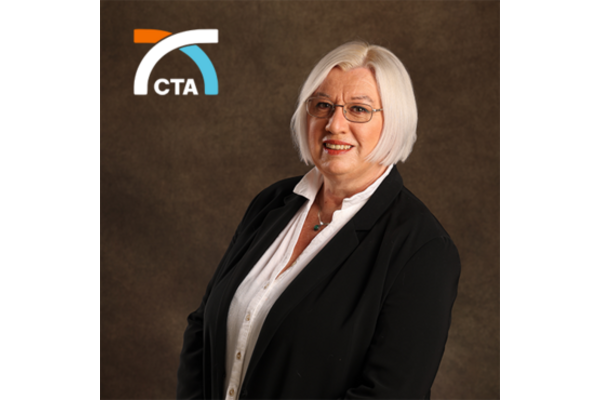
Sian Phillips
Chief Communications Officer
Sian Phillips has been involved with the Cannabis Trades Association for over eight years, initially as a member, then as a Non-Executive Director in 2018, before becoming an Executive Director in 2020. Her progression reflects both continuity and deep institutional knowledge of the organisation and the wider sector.
Sian’s background spans communications, public relations, stakeholder engagement, events management, and systems design. She brings particular strength in translating complex regulatory and policy issues into clear, structured narratives for regulators, politicians, members, and the public. Alongside this, she leads on member engagement, campaigns, training frameworks, and operational delivery.
Within the CTA, Sian is responsible for external communications, industry relationships, campaign development, and the practical execution of strategic initiatives. She is also instrumental in building the technical and digital systems that allow the CTA to operate efficiently with a lean executive structure.
Her approach combines strategic oversight with hands-on delivery, ensuring that policy positions, member services, and advocacy activity are grounded in operational reality rather than theory.

Marika Graham-Woods
CEO & Chair
Marika Graham-Woods brings a strong background in senior business strategy, international trade, and regulatory navigation. Prior to joining the CTA in 2020, she held leadership roles in large-scale paper manufacturing and supply industries, where she was responsible for restructuring commercial models, developing direct-to-market strategies, and managing complex cross-border operations.
Marika joined the CTA during the Covid period, at a time of significant financial and organisational risk for the association and the wider sector. Since then, she has led the strategic stabilisation and restructuring of the organisation, including financial recovery, governance consolidation, and long-term sustainability planning.
She is the CTA’s lead on regulatory strategy and policy architecture, working closely with UK regulators, advisory bodies, and international counterparts. Marika is known for her systems-based approach to regulation, viewing regulatory frameworks as interconnected structures rather than isolated rules, and for identifying practical pathways through regulatory gridlock.
Within the CTA, Marika leads on policy development, regulatory correspondence, high-level stakeholder engagement, and long-term sector positioning, ensuring that the association’s work is credible, defensible, and aligned with emerging international standards.


