New cannabinoid controls:
Protecting consumers without penalising legitimate hemp and CBD businesses

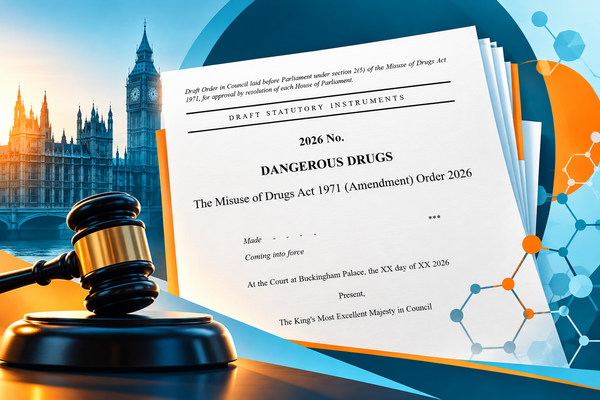
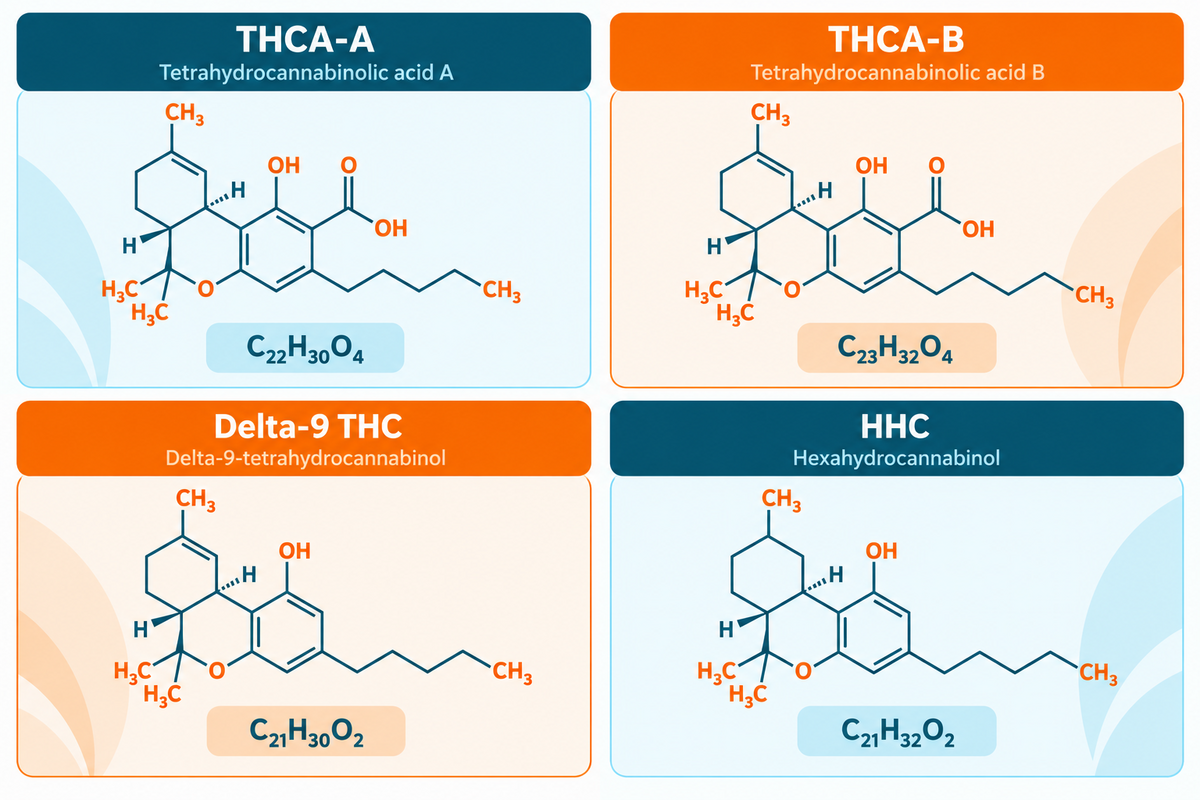
The UK Government is proposing changes to controlled drugs legislation that would bring twelve additional cannabinoids under Class B control, including hexahydrocannabinol (HHC) and two naturally occurring precursors of THC, tetrahydrocannabinolic acid A (THCA-A) and tetrahydrocannabinolic acid B (THCA-B).
The proposals, contained in the draft Misuse of Drugs Act 1971 (Amendment) Order 2026, follow recommendations from the Advisory Council on the Misuse of Drugs (ACMD) concerning emerging semi-synthetic cannabinoids and substances that may present risks to public health.
While the Cannabis Trades Association (CTA) recognises the importance of addressing potentially harmful substances, the proposed legislation also raises questions about how these controls will affect legitimate businesses manufacturing, processing and selling hemp-derived products.
At the centre of the issue is a fundamental distinction: the deliberate commercialisation of highly concentrated cannabinoids and the incidental presence of naturally occurring trace quantities in otherwise lawful products are not necessarily equivalent in their purpose, use or associated risks.
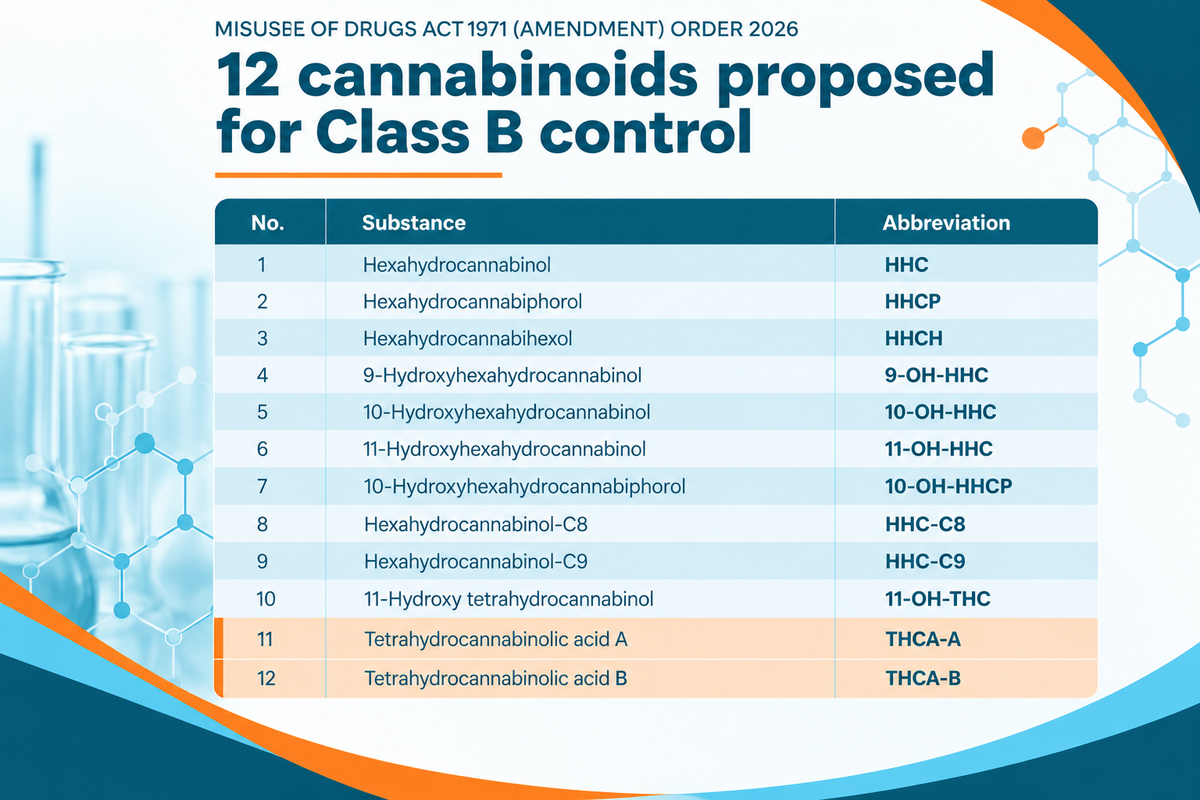
The draft Order would specifically bring ten semi-synthetic cannabinoids and two THC precursor acids under Class B control. These include HHC, HHCP, HHCH, several hydroxylated and extended-chain HHC derivatives, 11-hydroxy-THC, THCA-A and THCA-B.
The legislation also proposes amendments to the existing definition of cannabinol derivatives, intended to address substances that may not be adequately captured by current controls. The draft was originally laid before Parliament on 14 September 2026, with a replacement version laid on 27 October 2026. It remains draft legislation and requires parliamentary approval before becoming law. Under the proposed Order, the changes would come into force 28 days after the instrument is made.
The wider instrument also addresses other emerging drugs, including certain synthetic opioids and cathinones. However, the proposed cannabinoid controls are particularly relevant to the hemp and CBD industries because of the natural occurrence of THCA in cannabis plants and its possible presence in extracts.
THCA is a naturally occurring cannabinoid acid found in cannabis plants. It is a precursor to delta-9-tetrahydrocannabinol (THC), the principal intoxicating cannabinoid associated with cannabis. THCA itself is not generally regarded as producing the same intoxicating effects as THC in its unheated form. However, when exposed to sufficient heat, THCA can undergo a chemical process known as decarboxylation, converting it into THC. The degree of conversion depends on factors including temperature, duration of heating and processing conditions.
This distinction is important when considering products deliberately manufactured or marketed with very high concentrations of THCA. Highly concentrated THCA isolates, including products advertised with concentrations exceeding 98%, have been marketed in the UK for use in herbal teas and other preparations.
Although the presence of THCA does not automatically mean a product will deliver a particular amount of THC, its capacity to convert through heating raises legitimate questions about how concentrated products are marketed, their intended use and whether existing controls adequately address potential consumer risks. These considerations are materially different from those surrounding a conventional CBD product containing naturally occurring traces of THCA.
Cannabidiol (CBD) is not itself a controlled drug under the Misuse of Drugs Act 1971. However, CBD products derived from hemp may contain small quantities of other cannabinoids, including substances already subject to controlled-drug legislation. The Home Office has previously acknowledged the practical difficulties of producing CBD extracts entirely free from other cannabinoids. If THCA becomes a separately controlled substance, businesses will need to consider its presence alongside existing controlled cannabinoids when assessing product compliance.
This could have implications for extraction processes, laboratory testing, product specifications, imports and finished-product compliance. It is important to distinguish between a product that deliberately contains a concentrated controlled substance and one in which the same substance is present only incidentally. Classification alone does not establish that every product containing a newly controlled cannabinoid is unlawful. Existing exemptions and licensing provisions remain relevant, but their application depends on the circumstances and composition of the product.
Under Regulation 2 of the Misuse of Drugs Regulations 2001, certain products containing controlled substances may qualify as exempt products. To meet the definition, a product must satisfy three conditions. It must not be designed to administer the controlled drug to a person or animal; the controlled substance must not be readily recoverable in a manner or quantity presenting a health risk; and no component part may contain more than 1 mg of the controlled drug. All three requirements must be met.
The Home Office interprets the relevant component part as the container, such as a bottle of CBD oil, rather than an individual serving. This creates an important question about how an absolute quantity limit should operate across products and materials of substantially different sizes. A 10 ml bottle of CBD oil and a large commercial container of hemp-derived material may contain the same concentration of a particular cannabinoid, but the total quantity present will differ considerably. The 1 mg provision is an absolute limit, not a concentration-based threshold. As a result, identical trace concentrations can produce different outcomes under the quantity condition depending on the amount of material held in a component part.
This does not mean that all bulk hemp materials currently qualify for exemption. Some activities involving cannabis plants, controlled plant material or non-exempt extracts already require Home Office licensing. Nevertheless, the proposed addition of THCA creates a further reason to examine whether the existing framework provides sufficient clarity and proportionality for the modern hemp and CBD supply chain.
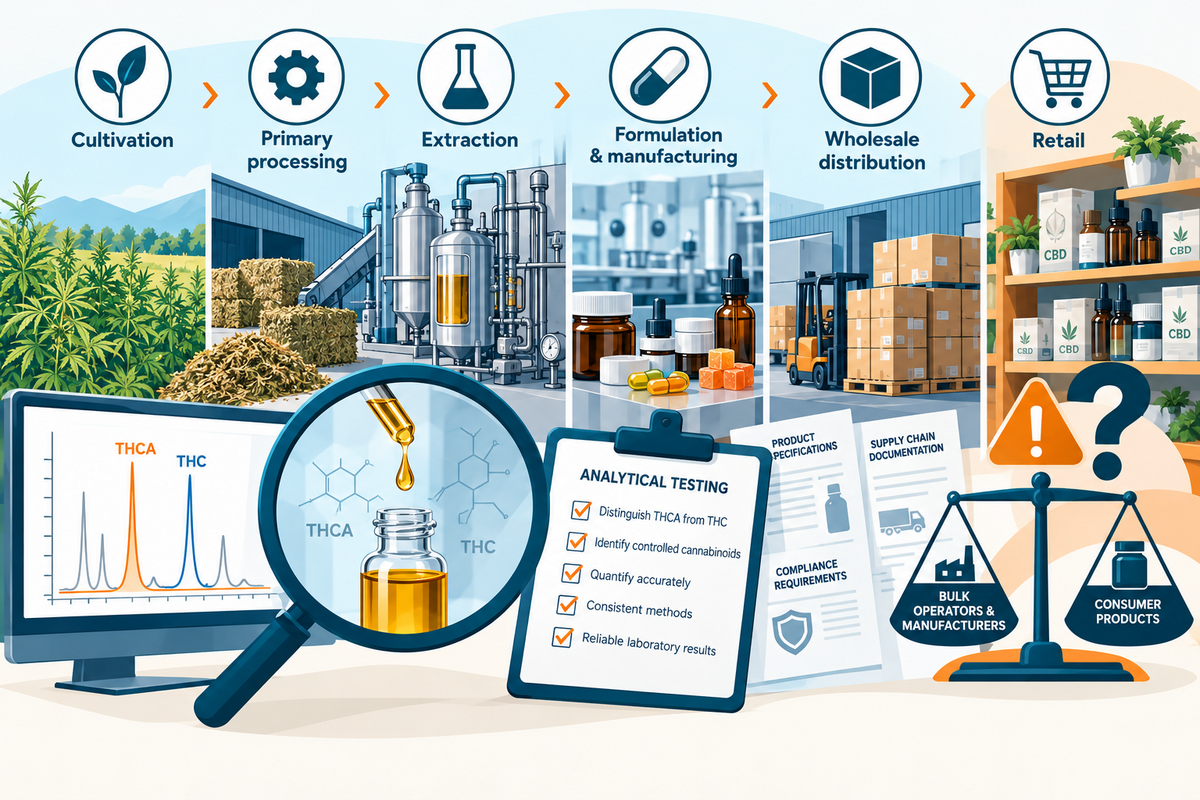
The UK hemp and CBD industries encompass a wide range of activities, from cultivation and primary processing through to extraction, formulation, manufacturing, wholesale distribution and retail. Many businesses operating in these sectors already work within established licensing, security, quality assurance and testing requirements. Introducing additional controlled cannabinoids may affect how businesses assess their materials, particularly where cannabinoid profiles change through processing or naturally occurring compounds are present at trace levels.
Testing methods will be especially important. Businesses need reliable analytical techniques capable of distinguishing THCA from THC, identifying relevant controlled cannabinoids and quantifying them accurately. Without clear and consistent requirements, businesses may face additional uncertainty over product specifications, laboratory results and supply-chain documentation.
The CTA believes these practical considerations deserve attention before the changes are implemented, particularly for smaller businesses that may have limited capacity to absorb additional compliance costs.
Any assessment must also recognise that bulk operators and manufacturers are not necessarily working under the same conditions as businesses selling finished consumer products. Existing security, licensing and handling obligations should be taken into account rather than duplicated unnecessarily.
The draft Order contains an important qualification: the twelve newly listed cannabinoids are specified with an exception where they are contained in cannabis or cannabis resin. However, that wording should not be interpreted as a blanket exemption for CBD oils, extracted cannabinoids or other finished products.
Cannabis and cannabis resin are themselves controlled under existing legislation, and the status of processed extracts or consumer products depends on their legal classification, composition and any applicable exemptions. Clarification will therefore be important for businesses seeking to understand how the new provisions interact with existing requirements.
There is also a distinction between controlling the raw cannabis plant, controlling an isolated cannabinoid and assessing a finished preparation containing several cannabinoids. These are different circumstances, and the regulatory consequences should be understood accordingly.

Marika Graham-Woods, Chief Executive Officer of the Cannabis Trades Association, said:
“We fully recognise the need for sensible controls where products are being marketed in ways that may present risks to consumers. If gaps in the existing legislation are being exploited, it is reasonable for the Government to address them.
“However, we must be careful not to create unintended consequences for the legitimate hemp and CBD industries. There is a considerable difference between selling a highly concentrated THCA isolate and a CBD product containing naturally occurring trace amounts of THCA.
“Our members already operate within a demanding regulatory environment, and any additional controls need to be proportionate, practical and supported by clear guidance, science and a clear view to consumer risk.
“Good regulation should protect consumers without placing unnecessary burdens on responsible businesses. We would welcome the opportunity to work with the Home Office to ensure that balance is achieved.”
The explanatory note accompanying the draft Order states that a full impact assessment has not been produced because no significant impact on the private, voluntary or public sectors is foreseen. For the hemp and CBD industries, this raises a reasonable question about how potential commercial effects have been considered.
The classification of an additional naturally occurring cannabinoid could have consequences for analytical testing, quality control, product development, supply-chain operations and regulatory compliance. The scale of those effects remains uncertain, and further engagement with affected businesses would help establish whether additional costs or operational changes are likely. An assessment informed by industry experience would also help distinguish genuine regulatory risks from circumstances where existing controls already provide appropriate safeguards.
The CTA recognises that cannabinoid regulation must respond to emerging substances, developments in product formulation and evidence of potential harm. At the same time, the legal treatment of concentrated products intended to exploit the intoxicating potential of cannabinoids should not be confused with the incidental presence of naturally occurring substances in legitimate hemp-derived products. For the UK CBD and hemp industries, the immediate priority is clarity.
Businesses need to understand how the proposed classification will affect existing exemptions, what analytical evidence will be expected and whether current licensing arrangements remain appropriate for their activities. The CTA welcomes continued engagement with the Home Office and other relevant authorities to ensure the proposed measures achieve their intended public health objectives without creating avoidable uncertainty for responsible operators. The objective should be a regulatory framework that addresses genuine consumer risks, reflects the science of cannabinoids and allows legitimate businesses to operate with confidence.
The CTA will continue to monitor the progress of the draft Order and its implications for members across the hemp, CBD and medicinal cannabis sectors.
The Government proposes to classify THCA-A and THCA-B as Class B controlled drugs. As at 30 October 2026, the legislation remains in draft form. The legal position of individual products will depend on the final legislation and any applicable exemptions or licensing provisions.
HHC is among the substances specifically named in the proposed Class B controls. The proposals aim to address emerging semi-synthetic cannabinoids and update existing legal definitions.
No. CBD itself is not being reclassified as a controlled drug by these proposals. However, CBD products may contain other cannabinoids that are controlled. Their legal status depends on their composition and whether they meet the relevant exemption requirements.
Under Regulation 2 of the Misuse of Drugs Regulations 2001, a product may qualify for exemption if it meets three conditions, including that no component part contains more than 1 mg of each controlled drug. Home Office guidance interprets the relevant component part as the container rather than the individual serving.
Businesses may need to review their testing, manufacturing, product specifications and compliance procedures where naturally occurring THCA is present. The precise implications will depend on the final legislation and the business's existing licensing arrangements.
UK Government. Replacement draft statutory instrument laid before Parliament on 27 October 2026. Contains the proposed Class B classification of THCA-A, THCA-B, HHC and nine other cannabinoids. https://www.legislation.gov.uk/ukdsi/2026/9780348288254
Published May 2025. Scientific and regulatory assessment of emerging semi-synthetic cannabinoids and associated risks, including recommendations for legislative controls. https://www.gov.uk/government/publications/semi-synthetic-cannabinoids-related-to-tetrahydro-cannabinol-and-cannabidiol
Updated 3 October 2024. Explains the legal treatment of CBD, controlled cannabinoids, licensing requirements and the exempt product provisions. https://www.gov.uk/government/publications/cannabis-cbd-and-other-cannabinoids-drug-licensing-factsheet/drug-licensing-factsheet-cannabis-cbd-and-other-cannabinoids
The statutory definition of an exempt product, including the three conditions and the 1 mg per component-part requirement. https://www.legislation.gov.uk/uksi/2001/3998/regulation/2
Ministerial correspondence dated 11 May 2026, addressing the Government's position on controlling THCA, including concerns raised about the potential implications for CBD, hemp and consumer products. https://www.gov.uk/government/publications/semi-synthetic-cannabinoids-related-to-tetrahydro-cannabinol-and-cannabidiol/further-response-letter-from-sarah-jones-mp-to-the-acmd-accessible
Published in Cannabis and Cannabinoid Research. Examines the conversion of acidic cannabinoids, including THCA, through decarboxylation. https://doi.org/10.1089/can.2016.0020


