The Rise and Retreat of Cannabis on the London Stock Exchange
The Collapse of the LSE’s Cannabis Pioneers and What It Reveals About the UK Market

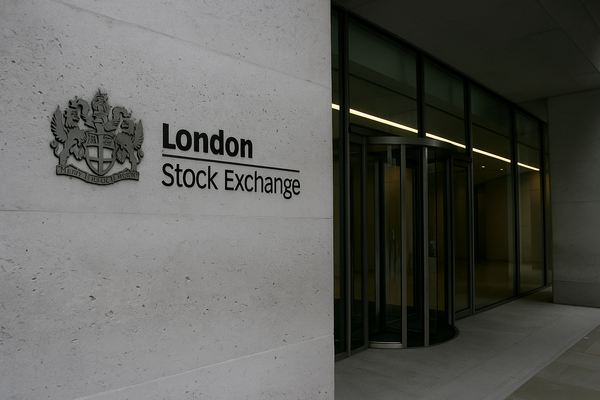
The global cannabis market was booming, Canada had established a legal recreational system, the United States was pushing state by state reform, and investors in the United Kingdom seemed ready to embrace a new growth sector. Yet four years later, not only did that wave fail to materialise, but every one of the original four companies associated with the LSE’s cannabis moment has either delisted, abandoned cannabis entirely or entered administration. Understanding why requires looking past easy explanations and appreciating the deeper structural issues that shaped the UK market.
The first misconception worth addressing is the idea that the failure of these companies can be blamed on a single regulatory slowdown or an isolated legislative decision. It is true that regulators have been cautious and that the UK system for both medical cannabis and CBD products has moved at a slow pace. However, the collapse of these early listed firms cannot be attributed to regulatory caution alone. Instead, a convergence of expectations, market limitations, capital pressures, and strategic missteps created an environment in which the companies were unable to survive in their original form.
When medical cannabis was legalised in 2018, the expectation was that the UK would quickly develop a functioning commercial ecosystem. This did not happen. Medical cannabis remained tightly controlled through Home Office licences, Schedule 2 rules, and rigorous MHRA requirements. Very few doctors felt confident prescribing, NHS adoption was minimal, and almost the entire patient base developed through private clinics. Although patient numbers eventually grew, especially after 2020, the market remained far smaller than the impression given to early investors. This gap between perception and reality was a central problem. Companies listed with valuations based on a market that did not yet meaningfully exist.
The CBD sector faced its own challenges. The Food Standards Agency introduced the Novel Foods requirement and later announced an advised acceptable daily intake of ten milligrams per day; far lower than the seventy milligrams many consumers were accustomed to. This decision influenced retailer confidence, constrained product portfolios, and added financial and regulatory pressure to an already fragmented industry. One of the early listed companies, Cellular Goods, was forced to withdraw its ingestible CBD range following compliance issues. Revenue remained modest, and the business pivoted repeatedly until it moved away from CBD almost entirely.
Another key factor was the fragility of the UK’s small cap markets. London has struggled for some time to retain and attract growth companies. Liquidity is low, valuations tend to be conservative, and institutional investors are cautious about ‘high risk’ early-stage ventures. For cannabis businesses that were pre revenue, heavily reliant on fundraising and still establishing their commercial footing, this environment became impossible to navigate. Oxford Cannabinoid Technologies provided the clearest example. It complained publicly that UK markets were turbulent and that its valuation did not reflect its underlying potential. After delisting, it attempted to raise capital privately but still could not secure the funds required for clinical development and later entered administration.
The cannabis companies that listed in 2021 also struggled with strategy and execution. Kanabo began life as a cannabis inhalation technology firm. It then acquired a digital GP service, attempted to build a telehealth and prescription ecosystem, and launched a pain clinic. This was ambitious but also expensive and difficult to integrate. The company was never able to demonstrate sustainable revenue growth. Financial difficulties led to delays in reporting, suspension of trading, and eventually administration.
MGC Pharmaceuticals, another early entrant, pursued a path focused on pharmaceutical development. It faced long timelines, high clinical costs, and the challenge of being an overseas issuer in a market that had limited appetite for speculative biotech ventures. It eventually delisted from London and now trades outside the UK.
It is fair to say that the Deregulation Act 2015 represented an opportunity for a more supportive environment. The act’s intention was to reduce burdens and encourage regulators to consider economic growth when exercising their functions. It did not revise the Misuse of Drugs Act, the Misuse of Drugs Regulations, or the FSA’s responsibilities. Even if regulators had felt a stronger push to support growth, the Act did not remove any of the core legal barriers that have defined cannabis in the UK. However, the problems faced by these companies were rooted in legislation and regulatory structures far beyond the scope of that law.
The truth is that the UK created a partial cannabis framework. Medical cannabis was legalised but left without clear clinical pathways or widespread prescriber support. CBD was permitted but placed under a restrictive and expensive regulatory regime. Industrial hemp remained entangled in outdated licensing rules and the Home Office Department for Drugs and Licensing unable to cope. None of these conditions resembled a coherent, investable national strategy. Companies listed into a market that appeared symbolically open but was practically undeveloped. The promise of a fast growing, well regulated, global facing UK cannabis sector never matched the reality on the ground.
Capital conditions also turned sharply against growth companies after 2021. Rising interest rates, investor rotation away from speculative sectors, and a general downturn in global cannabis valuations created an inhospitable landscape. Larger firms in North America lost billions in market value during the same period. Smaller UK companies without strong revenue streams had virtually no chance of weathering the shift.
Avihu Tamir’s prediction of fifty cannabis companies on the London Stock Exchange was not foolish. It simply belonged to a moment in which the UK seemed poised to follow the trajectory of Canada, Germany, or key US states. What unfolded instead was a slow, cautious and fragmented approach that prevented the sector from scaling. The result was that the companies most closely associated with the UK’s cannabis investment boom became casualties of structural hesitation and mismatched expectations.
The story of the LSE’s early cannabis listings is a lesson in how policy, markets, timing and execution interact. It reveals that symbolic legalisation is not enough. Clear pathways, predictable regulation, investor confidence, and workable commercial structures matter far more. Without these foundations, even well-intentioned companies operating in good faith struggle to survive on a public exchange.
If the UK wishes to build a sustainable cannabis industry in the future, its next chapter will need far greater alignment between legislation, regulation, market opportunity and capital strategy. Symbolic legalisation on its own cannot support a functioning sector and progress depends on clear rules, predictable processes and a coherent national direction. The CTA is working to create a combined front across industry, policymakers and regulators to ensure that the structural problems faced by the first wave of companies are not repeated. Encouragingly, overseas investors are beginning to look to the UK once again, recognising that with coordinated action and a renewed commitment to reform, the country has the potential to take meaningful steps forward. This renewed interest offers a genuine opportunity to build a stable, credible and investable cannabis sector that can finally realise the promise imagined in 2021.


