

What is actually happening?
The UK has agreed to follow the EU's food safety rules through the Sanitary and Phytosanitary (SPS) agreement.
This means the FSA will eventually stop operating its own Novel Foods authorisation process. The EU will take over responsibility for authorising CBD Novel Foods for the GB market.
What does this mean for CBD businesses?
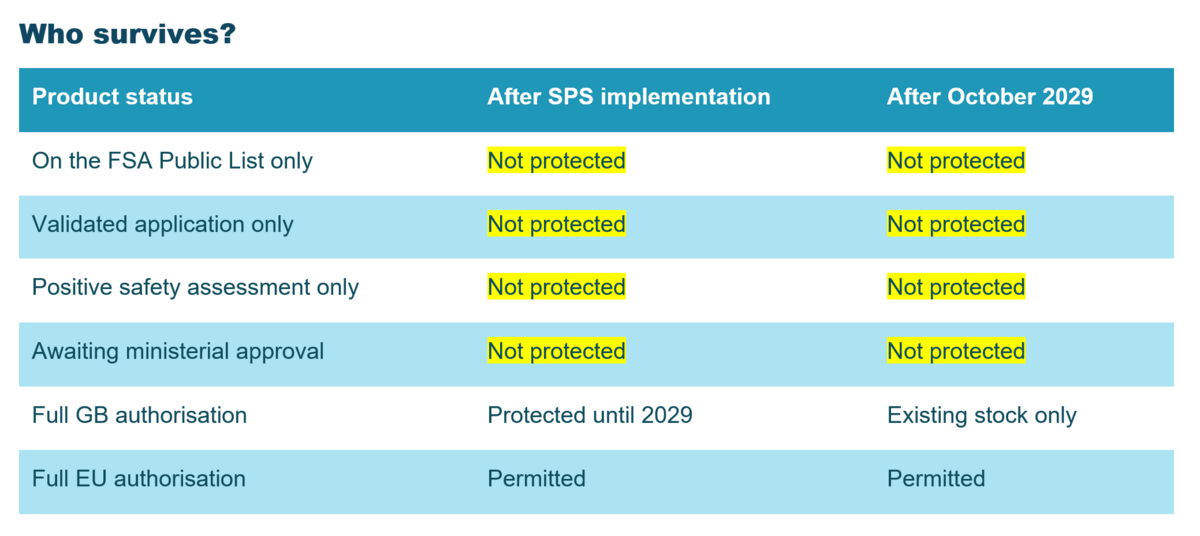
Being on the FSA's Public List is not the same as having a Novel Foods authorisation.
The FSA has negotiated an extended transition period for CBD, but it only protects products that have received full GB authorisation before the SPS agreement comes into effect.
The timeline
Now until implementation (expected in 2028)
The FSA and FSS can continue processing applications and granting GB authorisations.
SPS implementation date
The GB authorisation process ends. Products without full GB or EU authorisation will not benefit from the extended transition.
Implementation to October 2029
GB-authorised CBD products can continue to be manufactured and sold in Great Britain, but cannot enter the EU market without EU authorisation.
October 2029
EU rules fully apply. Continued production and marketing of new CBD stock will require EU authorisation. Eligible existing stock can be sold until exhausted.
What hasn't the FSA explained?
- What happens to outstanding applications when the GB process closes?
- Whether existing dossiers can be transferred to EFSA.
- Whether businesses will have to pay for further applications.
- Whether the EU will recognise the scientific work already undertaken by the FSA.
- How the FSA intends to complete the outstanding applications before implementation.
- What happens to businesses that have complied with every regulatory requirement but have been prevented from obtaining authorisation by regulatory delays.
- How the remaining stock and traceability arrangements will operate.
What happens next?
The FSA intends to hold stakeholder roundtables in mid-December, where businesses and trade associations can submit questions in advance.
No questions were permitted during this briefing.
The fundamental problem for the CBD industry
Imagine spending years queuing for permission to operate your business.
You have paid your fees, supplied your paperwork, undertaken scientific testing and complied with every new requirement.
The organisation responsible for processing your application then announces that it is closing the queue and handing responsibility to another organisation.
Only those who reach the front of the queue before it closes receive temporary protection.
Everyone else risks losing their ability to trade, irrespective of whether the delay was their fault.
There will be approximately 18 months to submit a dossier for EFSA Novel Food Approval (who have not managed to pass one yet!)
That is effectively what the FSA has announced.
The extended transition period does not protect the existing CBD industry as a whole. It protects only those who manage to obtain full authorisation before the deadline. The survival of those businesses is therefore heavily dependent on the speed at which the FSA completes its own work.
The crucial distinction for the CTA
The Government has negotiated additional time for authorised products, not additional protection for existing applicants. Those are two entirely different things, and that distinction should underpin the CTA's challenge.
This explanation is based on Rebecca Sudworth's stakeholder briefing. The precise implementation date was not confirmed during the call, and several operational details remain unresolved. The briefing was also expressly designated confidential, so public communications should rely on subsequently published government information.


