Global Cannabis Pharma Market Forecast highlights need for serious regulatory infrastructure
A new business research report, reported by Yahoo Finance, has forecast significant growth in the global cannabis pharmaceuticals market.

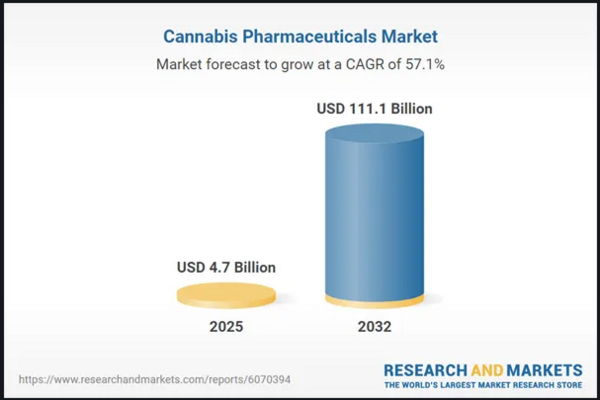
A new business research report, reported by Yahoo Finance, has forecast significant growth in the global cannabis pharmaceuticals market, with the sector projected to rise from an estimated US$4.7 billion in 2025 to US$111.1 billion by 2032. The report points to a market increasingly shaped by pharmaceutical development, clinical research, product standardisation and the involvement of established healthcare and cannabis companies.
For the Cannabis Trades Association, the figures are important, but the message behind them is more important still.
Medical cannabis and cannabis-derived pharmaceutical products are no longer a marginal conversation. They are part of a fast-developing global healthcare, regulatory and commercial landscape. As investment increases, so too does the need for clear rules, responsible market conduct, reliable evidence, robust quality systems and credible patient protection.
The report names companies including AbbVie, Aphria, Aurora Cannabis, Bausch Health and Canopy Growth as part of the wider market landscape, reflecting the growing intersection between traditional pharmaceutical businesses and cannabinoid-based product development.
A growing market does not automatically create a trusted market. Growth alone does not guarantee patient access, prescriber confidence, product quality or public understanding. In a sector such as cannabis, where medicines, wellness products, controlled substances, food law and consumer protection can all overlap, regulatory clarity is essential.
In the UK, the position remains highly specific. The NHS states that only certain cannabis-based medicines are likely to be prescribed, including for rare, severe forms of epilepsy, chemotherapy-related nausea and vomiting, and muscle stiffness and spasms caused by multiple sclerosis. It also distinguishes between prescription cannabis-based medicines and consumer products such as CBD oils or hemp products, where quality, legality and health claims must be treated carefully.
Cannabis pharmaceutical development sits within a very different framework from general cannabis retail, wellness CBD or industrial hemp. It requires evidence, licensing, manufacturing standards, pharmacovigilance, controlled supply chains, appropriate claims and proper oversight. Businesses entering this space need to understand not only the commercial opportunity, but the responsibilities that come with it.
Marika Graham-Woods, Executive Director of the Cannabis Trades Association, said:
“Reports of major market growth should be welcomed, but they should not distract from the fundamentals. Cannabis medicines need serious regulatory systems, credible evidence, good manufacturing practice and patient-centred governance. The opportunity is real, but so is the responsibility.”
The CTA continues to argue that cannabis policy cannot be treated as one single category. Medical cannabis, CBD and wellness, and industrial hemp each require informed and proportionate regulation. Where medicines are concerned, the priority must always be patient safety, clinical confidence and appropriate access.
The international growth of cannabis pharmaceuticals also underlines the importance of standards that can travel across borders. Companies working in this space need to think beyond one market, one regulator or one product classification. Supply chains, testing, documentation, manufacturing expectations and market access rules increasingly require an international mindset.
The opportunity is to build credible, compliant and export-ready businesses that can operate within healthcare and pharmaceutical expectations. The risk is that unclear regulation, inconsistent interpretation or poor market conduct could slow investment, undermine public confidence and leave patients without the access they need.
The CTA believes that mature industry representation is essential as this market develops.
Trade associations have a role to play in helping businesses understand regulation, engage with policymakers, improve standards and avoid the short-term thinking that damages emerging sectors. As the global cannabis pharmaceuticals market expands, industry must be willing to meet the level of scrutiny expected in healthcare.
The market may be growing quickly. Trust will take longer to build. And it will depend on evidence, standards, regulation and responsible businesses working together.
Reference: https://uk.finance.yahoo.com/news/cannabis-pharmaceuticals-business-research-report-090000846.html


