FSA Board backs first CBD novel food authorisations
The FSA Board has backed the first CBD novel food authorisations, with ministerial approval and future SPS rules now the key issues

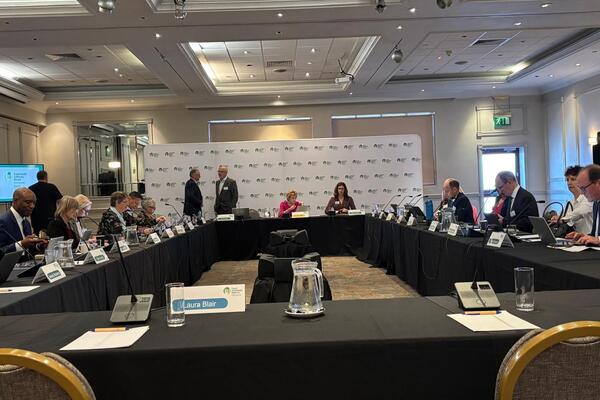
At its meeting in Swansea on 16 September 2026, the Board considered applications RP7, RP350 and RP427, all covering high-purity CBD novel foods that have already received positive safety assessments.
The recommendations will now move to Ministers in England and Wales for final decision, while Food Standards Scotland will follow its own process for Scottish Ministers.
One of the most important points from the meeting was the indication that the risk-management approach developed for these first applications will help shape how future CBD authorisations are handled.
Thomas Vincent, who presented the CBD paper to the Board, also acknowledged that much of the industry had reformulated products in response to the FSA’s 10 mg provisional acceptable daily intake, supported by responsible trade bodies.
The Board also discussed consumer controls, under-18s, enforcement and post-market monitoring. The FSA’s position remains that labelling and safety measures are proportionate to the level of identified risk, rather than introducing additional restrictions at this stage.
Clear enforcement guidance will now be important as authorised products begin moving through the system.
The Board’s decision does not itself authorise the products. Final approval still rests with Ministers.
The CTA is now seeking clarity on when the recommendations will be submitted, when ministerial decisions are expected and how quickly subsequent CBD applications can progress.
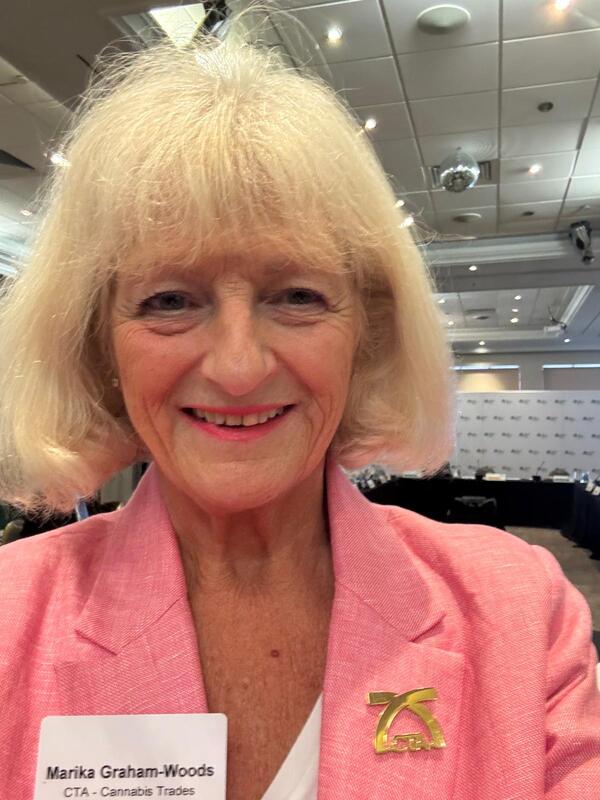
Marika Graham-Woods, CEO and Chairman of the Cannabis Trades Association, attended the meeting in Swansea and said,
“This is a significant step forward for a sector that has spent years working through an evolving regulatory process. Responsible businesses have reformulated, invested in compliance and responded to what the regulator has asked of them.
“The next stage now needs to move quickly. Industry needs clarity on the ministerial timetable, the remaining applications and the long-term regulatory framework.”
The biggest unresolved issue is the proposed UK-EU Sanitary and Phytosanitary Agreement. The FSA is still planning around possible implementation in summer 2027. If dynamic alignment is introduced, GB authorisations could potentially be superseded by EU requirements unless suitable transitional arrangements or exceptions are agreed.
This is particularly important for CBD because the UK and EU currently take different approaches to CBD risk management and there is no equivalent established EU-authorised CBD market into which the sector could simply transition.
The CTA will continue to press for CBD to be specifically considered within any future SPS arrangements.
The CTA will now focus on the ministerial timetable, future CBD authorisations, enforcement guidance, post-market surveillance and the impact of any SPS agreement on GB approvals.
Businesses affected by the CBD novel food process are encouraged to contact the CTA to raise concerns, share evidence or discuss the implications for their products and supply chains.


