CTA contributes to United Nations review of international drug policy
UNODC Independent Expert Panel - Resolution 68/6

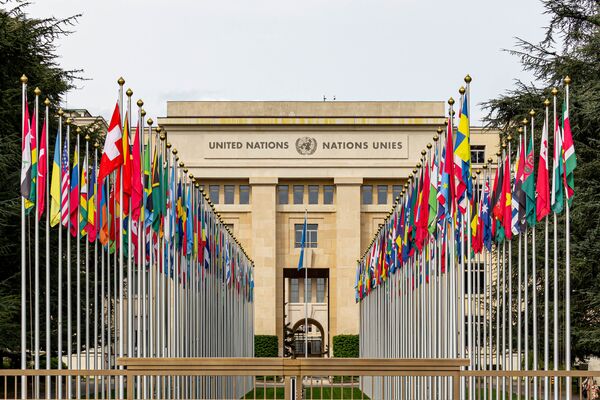
The independent expert panel, established under Resolution 68/6 of the United Nations Commission on Narcotic Drugs (CND), is examining the effectiveness of the international drug-control framework and identifying opportunities for improvement. The review provides an opportunity to consider whether existing policies are delivering meaningful outcomes for public health, patient access, scientific progress and legitimate economic activity.
The international drug-control system is founded on three principal conventions adopted in 1961, 1971 and 1988. Together, they establish obligations intended to prevent illicit trafficking, protect public health and ensure the availability of controlled substances for legitimate medical and scientific purposes. However, the CTA's submission highlights how inconsistent national interpretations and disproportionate regulatory requirements can create unnecessary barriers without corresponding public-health benefits.
The Association argues that effective regulation must distinguish between illicit drug activity, prescribed medicines, non-intoxicating cannabinoid products and legitimate agricultural production. Applying equivalent restrictions to activities presenting substantially different risks can undermine the objectives that international drug policy is intended to achieve.
Drawing on its regulatory engagement in the United Kingdom and internationally, the CTA identified several areas requiring greater clarity and cooperation. For medicinal cannabis, the submission highlights barriers involving treatment costs, professional understanding, international travel and continuity of lawful treatment. Although specialist prescribing became legal in the UK in November 2018, patients continue to encounter practical difficulties accessing treatment.
Industrial hemp presents different challenges. Despite its established agricultural and commercial applications, inconsistent national approaches to low-THC crops, flowers, leaves and extracts can restrict legitimate cultivation, processing and trade. The CTA emphasised the importance of distinguishing international treaty obligations from additional restrictions imposed through domestic agricultural, medicines, food and controlled-drug legislation, while also calling for improvements to scientific research licensing and international regulatory cooperation.
Marika Graham-Woods, Chief Executive Officer and Chair of the Cannabis Trades Association, emphasised the importance of practical reform and the need to assess international drug policy against measurable outcomes rather than the extent of regulatory restriction.
"International drug policy must be judged by what it achieves, not simply by what it restricts. We need a framework that protects public health, prevents illicit activity and enables legitimate medicine, research and agriculture to flourish. These objectives are not mutually exclusive. The CTA's contribution calls for practical, evidence-based reforms that deliver meaningful outcomes for patients, responsible businesses and society."
The CTA's submission identifies seven priorities for the Expert Panel's consideration, beginning with greater clarity about international treaty obligations and improved access to legitimate controlled medicines. It calls for evidence-based scheduling decisions, proportionate scientific research licensing and clearer international guidance concerning industrial hemp production and trade.
Further recommendations address regulatory consistency between drug-control, medicines, food and agricultural authorities, alongside proportionate enforcement, professional training and human rights safeguards. The CTA also advocates transparent evaluation of drug policy through measurable public-health, safety and regulatory outcomes, recognising that arrests, seizures and enforcement activity alone cannot adequately demonstrate policy effectiveness.
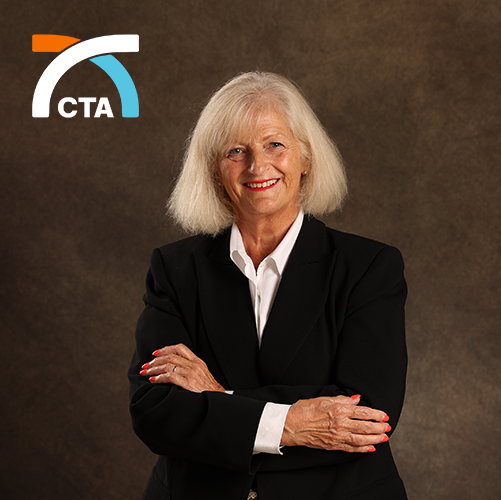
“International drug policy must be judged by what it achieves, not simply by what it restricts. We need a framework that protects public health, prevents illicit activity and enables legitimate medicine, research and agriculture to flourish. These objectives are not mutually exclusive. The CTA's contribution calls for practical, evidence-based reforms that deliver meaningful outcomes for patients, responsible businesses and society.”
Marika Graham-Woods, CEO and Chair
The CTA welcomes the opportunity for legitimate industry stakeholders to contribute alongside healthcare professionals, researchers, patients and civil society. Practical regulatory experience can help identify where international obligations are working effectively and where their implementation creates unintended consequences, particularly for businesses and patients operating within lawful frameworks.
Through its submission, the Association continues to advocate for proportionate, scientifically informed regulation that protects society while enabling responsible development across the medicinal cannabis, CBD and industrial hemp sectors. The CTA hopes its recommendations will contribute to a more coherent international approach that maintains appropriate safeguards while recognising the importance of medical access, research, sustainable agriculture and legitimate trade.
United Nations Independent Expert Panel:
https://www.unodc.org/unodc/en/commissions/CND/expert-panel.html
International Drug Policy Consortium:
https://idpc.net/news/2026/09/expert-panel-invites-contributions-to-independent-review-of-un-drug-policy


